Bimanual vs Single-Arm Robot Manipulation for AI Research
Updated: Sep 15
Robotic research labs must balance hardware cost against the data needs of modern foundation models. A single-arm system provides a portable, low-cost way to start basic work in the field. However, bimanual platforms are now the industry standard for learning complex tasks like peg-insertion and folding.
Choosing between bimanual vs single-arm robot manipulation depends on the specific skill and data needs of your physical AI project. Single-arm platforms like the Solo AI provide a portable, energy-efficient tool for basic pick-and-place tasks or field research. They are ideal for projects with limited space or budgets that focus on single-point moves. In contrast, bimanual systems like the Stationary AI are necessary for complex tasks that require dual-arm work, such as peg-insertion or folding. Research published in MDPI Applied Sciences, 2025 shows that dual-arm robots are 20% faster than single-arm systems in precision assembly tasks. While bimanual setups have a higher starting cost, they offer a wider range of research uses and work with standard datasets like the ALOHA ecosystem. Your choice should align with whether your model needs single-task data or complex, human-like moves.
Finding the best fit for your lab requires a deep look at how these platforms handle data and task complexity. The next section breaks down the mechanical and control differences between the two approaches so you can match hardware to your specific research goals.
for the Trossen AI platform that matches your research goals and budget.
Bimanual Vs Single-arm Robot Manipulation: Understanding the Core Differences Between Single-Arm and Bimanual Robot Manipulation
Choosing between a single-arm and bimanual setup is a key decision for any physical AI laboratory. While both systems use the same high-grade parts, their designs and control methods serve different research goals. Trossen Robotics provides tools for both paths, such as the $11,385.95 Solo AI single-arm system and the $23,995.95 Stationary AI bimanual workstation. Knowing how these tools differ in build and use will help you pick the best one for your work.
Mechanical Design and Form Factor
The clearest difference is how many arms the robot uses to work in its space. A single-arm robot, like the Solo AI, uses one WidowX AI arm set on a steady tripod or frame. This small size is easy to move and takes up very little space in a lab or field site. A bimanual system like the Stationary AI uses two arms that work as a team on a fixed frame. This design acts like a human and lets the robot hold an object with one hand while the other hand does a task.
Both systems use the 6-DOF WidowX AI arm. Each arm can lift a 1.5kg load and has a 700mm reach. While the arms are the same, the bimanual frame adds more cameras and arm pairs to help with hard tasks. A 2025 study in Applied Sciences shows that dual-arm robots can be 20% faster than single-arm robots in tasks that need high precision. This speed comes from using two arms at once, rather than moving one arm back and forth.
Control Needs and Data Use
How you control the robot also differs for each setup. Single-arm robots are easy to program and use. This makes them great for simple tasks like sorting or moving items. Because they have fewer parts, they use less power. Research shows that single-arm robots use about 205.8J per cycle. Bimanual systems use about 260J to do the same work. This makes the single-arm path a good choice for field work where power is low.
Bimanual work needs more complex code to keep the two arms from hitting each other. These systems are the standard for research into human-like work, such as the bimanual peg-insertion experiment with ACT. While the control needs are higher, the skill to handle two-handed tasks is a must for training new AI. If your goal is to move from simple tasks to full-body work, a bimanual setup gives you the right tools for advanced learning.
What Are the Research Advantages of a Bimanual Setup?
Answer: Two-arm robot kits offer movement like a human. They allow for tough tasks like part builds and cloth folding. A study shows these kits are 20% faster than one-arm robots for exact work. They also fit the ALOHA system, which is the top choice for AI labs today.
Greater Speed for Exact Tasks
Many labs use two-arm robots to speed up their work. Two arms let a robot work like a person. One arm can hold an object while the other arm moves it. This makes the work much smoother. A study in MDPI Applied Sciences shows that two-arm robots are 20% faster than one-arm robots for exact builds. This boost helps teams get more data in less time.
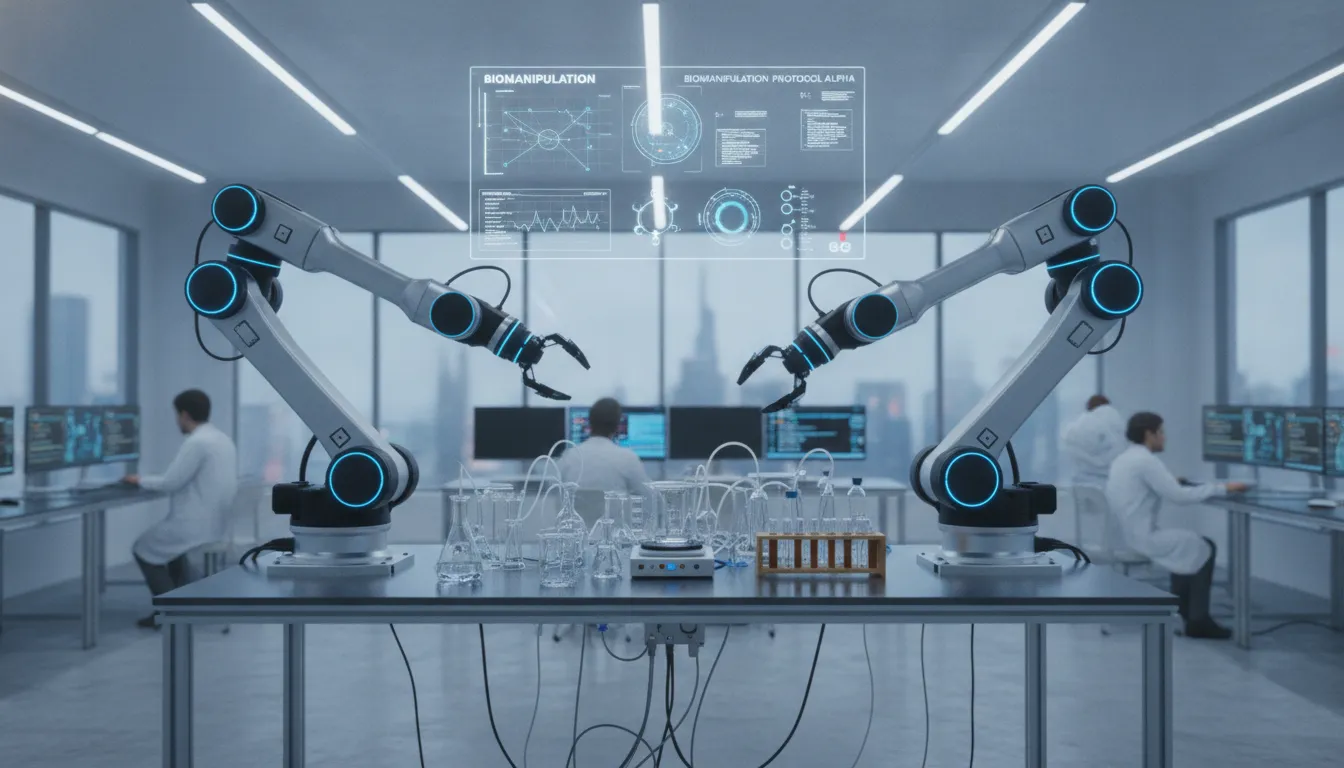
Speed is not just about moving fast. It is about how well the robot hands work together. These two-arm kits are a top choice when labs compare bimanual vs single-arm robot manipulation for their tests. Trossen kits use 6-DOF arms that can lift 1.5kg. These arms have a long reach and move with great care. Labs that use these kits can run more tests each day. This leads to quick wins in AI and robot learning.
Solving Tough Handling Tasks
Some jobs are too hard for just one arm. Two-arm robots can do things like tie knots or fold cloth. They are also great for a bimanual peg-insertion experiment with ACT. This test needs both arms to act as one. The ACT model has reached an 80% success rate on this task with Trossen gear. This shows the power of a two-arm kit for fine work.
Working with two arms also allows for full-body control. This means the robot can keep its balance as it moves big parts. This is a big help for shared tasks. In these cases, the arms work as a team to lift or turn heavy items. More than 400 schools now use these kits for this type of work. They find that two-arm kits open doors to new kinds of tests that one-arm robots cannot do.
Full Support for the ALOHA System
The the ALOHA project and its evolution into Trossen AI changed how labs work. This system is now the standard for two-arm study. It works well with tools like LeRobot and OpenPi. Trossen has spent 21 years building these kits. We work with leaders like Google DeepMind and Stanford to keep our tech at the top. This means our users get the best tools for their AI models.
Using a standard system helps you share data with other teams. You can use the same data and training steps as top labs. This makes it easy to check your results and grow your work. Trossen makes a Stationary AI lab workstation that is ready for this group. It comes with all the cameras and arms you need. You can set it up in hours and start your work right away.
When Does a Single-Arm Robot Make More Sense for AI Research?
Answer: A single-arm robot is the best choice for AI research that needs high portability, low energy use, or a lower entry price. These systems are ideal for field data collection and single-task learning where bimanual needs are not yet required.
Lower barriers to entry and better efficiency
Budget is often the top factor when you set up a new lab or pilot project. The Solo AI base price is $11,385.95, which makes it much more affordable than full dual-arm setups. This lower cost allows teams to buy several units for large-scale data capture at once. You can compare this to other options in the complete Trossen AI platform lineup to find the best fit for your needs.
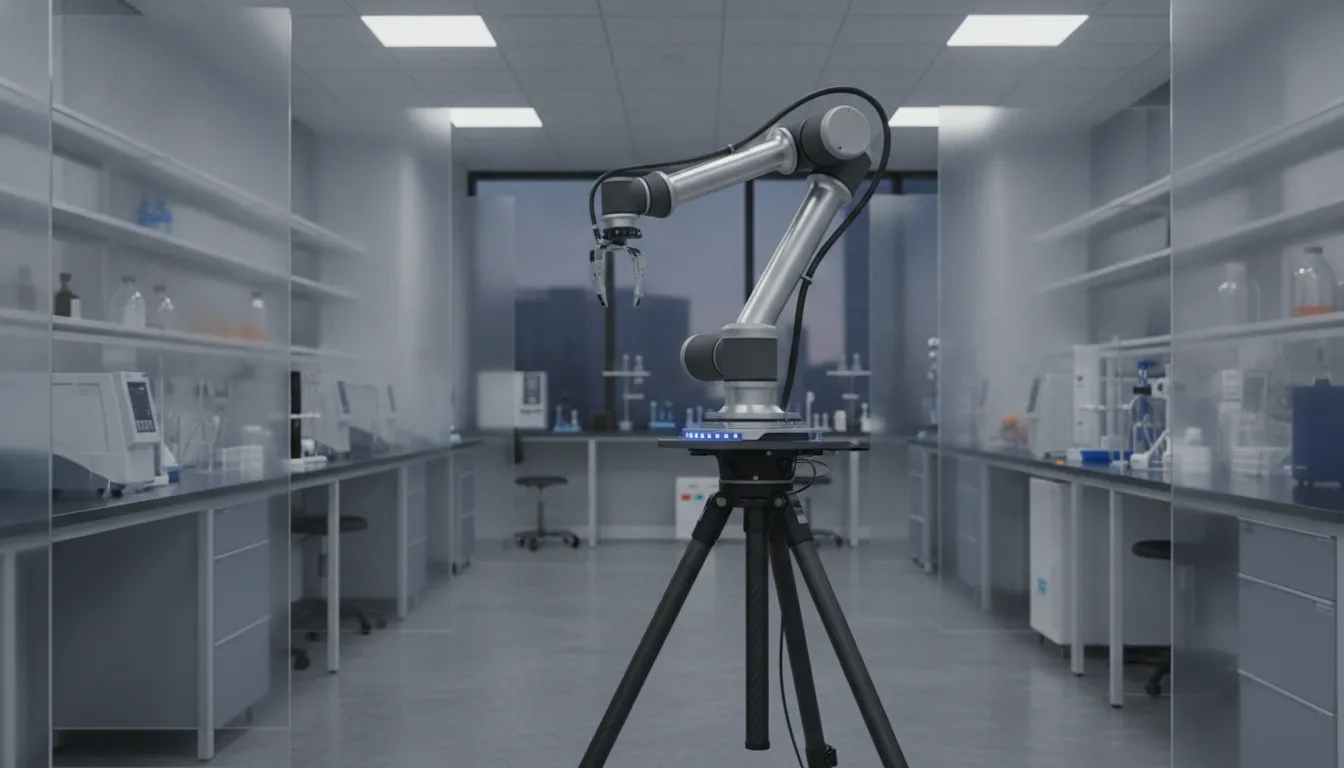
Energy use is another area where single-arm systems win. A study in MDPI Applied Sciences found that a single-arm robot uses about 205.8J per cycle. In contrast, a dual-arm system uses about 260J for a similar task. While two arms can be 20% faster in some assembly work, the single-arm setup is much more efficient. This makes it a strong choice for research that relies on battery power or long-term runtime in the field.
Compact portability for field data collection
Modern AI research often needs to move beyond the clean lines of a lab. The Solo AI uses a tripod-mounted design that is easy to pack and move. This compact form factor is perfect for field data collection in new spaces. You can set the system up on any flat surface in minutes to start gathering training data for your models.
Each arm features a 6-DOF design with a 1.5kg payload and a 700mm reach. These specs are enough for most single-arm tasks in the real world. The system also includes Intel RealSense D405 cameras for high-quality depth sensing. This makes it a powerful tool for researchers who need a portable but capable platform for vision-based learning.
A proven path for academic scaling
More than 400 universities use Trossen platforms for their daily research. One reason for this is the speed of setup. You can set up a Solo AI in just a few hours instead of spending weeks on DIY builds. This fast start lets you focus on your code and models rather than fixing hardware bugs.
These tools are built on the same bases as those used at the Stanford Robotics Center for top-level AI studies. Choosing between bimanual vs single-arm robot manipulation is a key step in building your lab. If your task only needs one gripper to pick and place an object, a second arm may add more cost than value. A single-arm system is much easier to control and takes up little space in a workshop.
It is crucial to know that your choice of hardware sets your path for the future. Two Solo AI units cannot be converted into a Stationary AI lab workstation later. The frame, wiring, and parts for the dual-arm system are not sold as solo items. Because of this, you should choose the Solo AI for its portability and cost. You should plan for a bimanual unit if you need dual-arm work later.
Key Factors for Choosing the Right Platform: Bimanual vs. Single-Arm
Choosing between two-arm and one-arm robots depends on your goals and your budget. While one-arm systems offer a low-cost way to start, two-arm platforms allow for much more complex work. Researchers must think about the trade-offs between cost, ease of use, and the types of tasks the robot can do. The right choice helps your team move from first tests to real-world results in less time.
Answer: Choose a one-arm platform for field data capture and simple tasks. Select a two-arm system for complex lab research or mobile work that needs two hands to work together.
Get a quote to see how these platforms help your team move from lab tests to real-world results.
Comparing Robotic Platform Options
A clear look at your options can show the best path for your research. The complete Trossen AI platform lineup includes tools built for many research needs. You should think about how many arms you need and where the robot will work. The table below compares the key features of our main research platforms.
Platform | Price | Arm Pairs | Cameras | Best For |
Solo AI | $11,385.95 | 1 Pair | 2 | Field data collection |
Stationary AI | $23,995.95 | 2 Pairs | 4 | Lab manipulation |
Mobile AI | $33,695.95+ | 2 Pairs | 3 | Mobile bimanual tasks |
A one-arm setup like the Solo AI is great for focused data capture. It uses a tripod mount and is very easy to move between sites. In contrast, two-arm systems like the Stationary AI provide a full workstation. This setup is ideal for bimanual peg-insertion experiment with ACT and other complex tasks.
Which Platform Fits Your Research Setting?
Budget is a big factor when you pick a platform. Prices for these systems range from about $11,000 to $38,000. While cost is important, your research goals should lead the way. If your work needs two arms to work as a team, a one-arm robot will not be enough. You must also think about the setting where the robot will work. A lab setting suits a fixed system, but field work needs a portable or mobile base.
Building a custom system from parts can take weeks or even months. But these platforms allow for setup in just a few hours. This fast start lets your team focus on code and data right away. You can find more about how two-arm robots help with precision assembly tasks in modern research. Note that you cannot convert two Solo AI units into a Stationary AI later. The frame and cables are unique to each system, so it is best to buy the right one first.
Systems and Scaling for the Future
The ALOHA project and its growth into Trossen AI shows the value of a shared platform. All these systems work with the Trossen SDK and tools like ROS 2 and MuJoCo. They also support native paths for LeRobot and OpenPi. This means you can share data and models across different setups without extra work. Whether you start with one arm or two, you gain access to a large community of AI experts.
More than 400 universities now use these platforms for their work. The standard build timeline is only two to three weeks for most models. This allows your lab to scale up quickly as your needs grow. Contact Trossen Robotics today to learn which platform fits your exact research goals.
Bimanual vs. Single-Arm: A Comparative Look at Real-World Research Applications
Answer: Bimanual platforms excel in complex tasks like imitation learning and precision assembly where two hands must coordinate. Single-arm robots are better for high-volume data collection and mobile research due to their lower cost and portability.
Imitation learning and data collection
Research teams often use bimanual robots to train neural networks via imitation learning. The ALOHA ecosystem has become a standard for this work. For instance, the Action Chunking with Transformers (ACT) model achieved an 80% success rate on a bimanual peg-insertion experiment with ACT after just 60 demonstrations. This type of two-handed coordination is needed for tasks that a single arm cannot easily do, such as folding cloth or assembling small parts.
In contrast, single-arm robots like the Solo AI are used for gathering data at scale. These units are portable and easy to move to new sites. Research shows that single-arm systems use less energy, about 205.8J per cycle compared to 260J for dual-arm models, according to research in Applied Sciences. This makes them ideal for field use where battery life and weight are key.
Vision-language-action model development
Modern AI research relies on large datasets to train Vision-Language-Action (VLA) models. The Trossen SDK supports tools like the complete Trossen AI platform lineup, including native support for OpenPi and the pi0 policy. These models learn to map visual inputs to physical actions. Bimanual setups provide more complex data streams, which help these models learn how to handle two arms at once.
Teams can record joint states at up to 200 Hz while syncing multiple camera streams at 90 FPS. This high-speed data is crucial for training policies that need to be fast and smooth. By using HDF5 or Parquet formats, researchers can feed this data directly into training pipelines. This workflow helps speed up the move from lab tests to real-world use.
Mobile manipulation and precision assembly
Mobile manipulation is another area where the choice of arm matters. A Mobile AI four-arm platform allows for complex work in changing spaces. These systems can move through a building while performing tasks like opening doors or carrying items. The extra arms provide the balance and reach needed for these multi-step workflows.
For assembly tasks, bimanual systems offer a clear speed boost. Research indicates that dual-arm robots are 20% faster than single-arm robots in precision assembly tasks. This speed comes from the ability to hold a part with one hand while the other hand works on it. While a single arm is cheaper, the bimanual setup often pays for itself through better performance in these complex lab settings.
How Trossen Robotics Supports Both Research Paths
Trossen Robotics has a 21-year track record in the field of research robotics. The company provides systems for both single-arm and bimanual research paths. This helps teams start their work fast and scale as their needs grow. Whether you choose bimanual vs single-arm robot manipulation, you get a system that is ready to use in hours. Trossen serves more than 10,000 customers with solid hardware that uses hardware-based gravity compensation.
Contact Trossen Robotics today to get a quote on the right platform for your lab.
A Unified Software Ecosystem
All Trossen AI platforms use the same core software tools. The Trossen SDK is an open-source C++ framework with Python bindings. This allows your team to use the tools they already know. The SDK also supports ROS 2 Humble and MuJoCo simulation. You can record high-quality data at up to 200 Hz for training new models. This one way makes it easy to move code from one robot to another.
Teams can move from simulation to real hardware with low effort. Trossen platforms support MuJoCo and NVIDIA Isaac Sim to help test new ideas. This path helps find and fix bugs before they touch the robot. The SDK uses a lock-free data pipeline to ensure that no frames are dropped during a task. This is key for training models that need clean and steady data streams.
Fit for Industry Standards
The Trossen AI lineup fits well with the current AI research world. It has native support for the ALOHA ecosystem used by top groups. This setup was made with help from elite labs at Stanford. The platforms also work with LeRobot and OpenPi right out of the box. This makes it simple to share data and models with the world research group.
The systems are also ready for new tools like LeRobot from Hugging Face. You can export data in the LeRobot V2 format with one step. This makes it easy to go from moving the robot to training an AI. By using these standard formats, you can use models from other labs. This saves your team weeks of work and helps you reach your goals faster. It also links back to the ALOHA project and its path to Trossen AI.
The Trossen Promise of Support
Every Trossen platform comes with "The Trossen Promise." This includes lifetime technical support from engineers based in the U.S. Your team can expect a response within 48 hours to any question or issue. This level of care ensures that your research stays on track. It is one big reason why more than 400 universities trust Trossen for their robotics needs.
The support team can help with everything from the first setup to complex coding tasks. This is a big help compared to DIY kits that have no official support. Trossen hardware is built to last for years of heavy use. If you need a new part, you can get one from the company fast. Note that a Solo AI system cannot be changed into a Stationary AI later, so picking the right path early is key.
Explore the full range of Trossen AI systems and start your research today.
Answer: Trossen Robotics supports both paths with a unified SDK, support for ROS 2 and MuJoCo, and native ALOHA compatibility. Every platform includes lifetime technical support and a 48-hour response guarantee to keep research moving fast.
Frequently Asked Questions
When should I choose a bimanual robot over a single-arm robot for AI research?
You should pick a bimanual robot for tasks that need two arms to work together, such as peg-insertion or building complex parts. These systems are the standard for imitation learning and large data collection in labs. Research in MDPI Applied Sciences shows that dual-arm robots can be 20 percent faster than single-arm tools for exact work. If your project needs human-like moves or joint tasks, a bimanual setup is the best choice for your research.
What are the advantages of single-arm robots in research?
Single-arm robots like the Solo AI offer a low cost and easy setup for field research. These tools are often more power-saving and take up less space than dual-arm systems. Based on MDPI Applied Sciences, single-arm robots use about 205 Joules of power per task cycle. This makes them ideal for mobile data collection and simple tasks that only need one hand. They are also easier to move to different sites for testing in the real world.
Can two single-arm robots be used as a bimanual system?
It is not easy to turn two single-arm robots into a full bimanual system. Platforms like the Solo AI use specific frames and cables that are not sold on their own. The Stationary AI system is built with a custom desk and four cameras to track moves from many angles. Most researchers find that buying a pre-built dual-arm platform saves weeks of setup time. This path ensures that your arms, sensors, and controllers work together without the need for custom shop work or extra parts.
How much does a bimanual research robot cost compared to a single-arm?
A single-arm Solo AI platform starts at a base price of 11,385.95 dollars. In contrast, a bimanual Stationary AI setup for lab work begins at 23,995.95 dollars. Mobile bimanual systems can cost up to 37,845.95 dollars if they include a laptop for on-site data processing. While bimanual tools have a higher upfront cost, they support a wider range of research tasks. Choosing the right platform depends on your lab budget and whether you need one or two arms for your AI training.
Ready to Choose Your Next Robot Research Platform?
Choosing the right robot arm platform now positions your research team to start collecting real-world data for your next physical AI models. Starting your bimanual or single-arm research today helps your lab reach its key goals faster and more efficiently. The right hardware platform supports your project roadmap and avoids costly retrofits as your research scales.
Are you ready to request a quote for the right research platform? You can contact our team of experts to talk to a robotics expert about your needs. Get your physical AI project moving toward real world research results starting right now.
Comments