Robotics Data Collection: Designing the Physical AI Pipeline
Updated: Sep 15
Successful physical AI deployments depend on high-quality interaction datasets that do not exist on the public internet. Large-scale models require more than just web text to understand how to navigate in space.
Robotics data collection is the process of capturing sensor data and motor commands to train neural networks for physical AI tasks. Unlike vision or language models that learn from the web, robots need unique data that link sight to action. This creates a data gap because the video and motion commands needed for robot learning are not online, according to Science Robotics. To close this gap, engineers use teleoperation and clear steps to record human runs in many settings. This data helps models work in the real world instead of just a lab. A strong pipeline turns these raw files into formats like Parquet or HDF5 for training. By optimizing this workflow, teams can move rapidly from initial testing to full deployment in the field.
Building a strong pipeline needs more than just hardware; it needs a way to beat common data hurdles. Knowing why real-world data is the only way to solve The Robotics Data Collection Bottleneck: Why Simulations Aren't Enough is key for any project. The path begins with
The Robotics Data Collection Bottleneck: Why Simulations Aren't Enough
The robotics data collection bottleneck exists because public web data lacks motor actions and simulations suffer from the reality gap. Real-world interaction datasets are the only way to train robust physical AI policies that generalize across diverse lighting, soft materials, and dynamic environments.
Building smart robots requires massive amounts of data. In the past, people tried to program every move by hand. This worked for simple tasks in a lab but fails in the real world. Today, we use teleoperation for data collection to show robots how to act. This method helps capture the subtle way a hand moves or how a grip shifts. Without this real data, a robot cannot learn how to handle new tools or tasks. This lack of data is now the main block for most teams.
The gap between sims and reality
Many teams try to train robots in digital worlds. This is called a simulation. It is fast and cheap to run many tests at once. But these digital worlds do not match the real world perfectly. Small details are hard to model. These include things like:
Changing light and shadows in a room.
Surfaces that are soft or slippery.
Dust and dirt that block sensors.
The way cables or wires bend and move.
When a robot moves from a sim to a real room, it often fails. This is known as the reality gap. This happens because the sim does not have the messy details of real life. To fix this, teams must collect data in the real world where the robot will work. Only real-world data can show the robot how to deal with these hard parts.
Why small datasets are not enough
Large AI models for text use billions of words. Robotics is different because data is much harder to get. Popular open-source sets like DROID have only about 5,000 hours of actions. Experts at Scale AI note this is too little to handle the real world. A robot needs to see a task done many times to truly learn it. If the data set is too small, the robot will only work in one specific spot. It will not know what to do if a chair is moved or a light is dimmed.
Success through diverse data
The quality of your data matters as much as the amount. Some robots learn from data that looks the same every time. These robots often fail when they see something new. Research shows that robots trained on diverse data have a 77.5% success rate in new settings. In contrast, robots trained on data that lacks variety only succeed 2.5% of the time. You can find these facts in studies from Stanford University. High-quality robotics data collection helps robots deal with changes. This is why getting real-world data is the most important step for physical AI.
To fix this bottleneck, teams need better tools. High-speed sensors and easy software help capture data faster. When you record every joint move and camera frame, you build a strong base for your model. This is the only way to move from a lab test to a real product that works every time.
Designing the Data Collection Workflow: From Task Contract to Teleoperation
A set workflow is the base of good robotics data collection. In the past, teams used analytical decomposition and motion plans to code robot tasks by hand. Now, we use data-driven paths to help robots learn from human demos. This shift from stiff code to soft learning makes robots better in real-world spots.
Building the Task Contract
You must first define a task contract to keep your data the same over many trials. This contract lists the start and end states of each move. You should set clear lines for where things start and where the task ends. A good contract also lists the sensor data you need to save, like joint angles and camera feeds. This work saves time in the training phase by keeping the data clean and useful.
Setting Up the Workspace
Next, you must tune your gear to match the workspace. You will need to sync the links between your lead and follow arms for fine control. Using a data collection UI helps you track these bits in real time. Good setup stops drift and makes sure each demo follows the same rules. You should also check for any blind spots in your camera views before you start.
Gathering Data Through Teleoperation
Once the space is ready, you can start to get data via teleoperation for data collection. This task involves a person guiding the robot through the work to show it how to move. Following a set plan helps you get the varied data needed for model success.

A high-tech research lab workstation with synchronized cameras and sensors for teleoperated robotics data collection.
- Define state boundaries
: Set the exact start pose for the robot and the spot of all items to keep trials the same.
- Calibrate coordinates
: Sync the lead and follow systems so the robot copies the human's hand moves with no lag.
- Conduct pilot runs
: Do the task a few times without recording to find any physical snags in the flow.
- Record demonstrations
: Use the robot to do the task many times while the system logs all sensor and move data.
- Track progress
: Watch your success rates and data counts to make sure you hit the goal for your training set.
- Verify data quality
: Check the logs to confirm that all video frames and motor commands were saved at the right rates.
Success in teleoperation needs both speed and care. By using a workflow that you can repeat, you can build data sets that help your robots handle tough tasks with ease. This path turns raw work into a tool for physical AI growth.
Multimodal Capture and Low-Latency Hardware Synchronization
Capturing good training data for robots takes more than just video. A top-tier robotics data collection plan must link many sensor types into one timed stream. This task is called multi-modal capture. It blends video from cameras with data from joint angles and force sensors. If these points do not match in time, the AI model will not learn the link between sight and move.
Timing Cameras and Physical Sensors
In a common setup, you may use many RGB-D cameras to watch the workspace. At the same time, the robot tracks its limb spots and the grip force. To build a strong set, every frame of video must align well with the robot states. Even a small lag of 50 ms can cause the AI to fail. Good timing makes sure the model sees what the robot felt at that exact point.
A smart robotics data collection SDK helps with this task. These tools tag each data point with a shared clock. This lets you join fast video with slow sensor data without loss. By using one main clock, you can check that your cameras and arms all work as one. This keeps the data clean for training.
High-Speed CAN FD and Ethernet Performance
To get the best results, the parts must talk fast. Trossen systems use a high-speed CAN FD bus that hits rates of 500Hz or more. This lets you get fast news from the parts and sensors. These speeds help to stop lag and make sure the brain has the latest facts. Low-lag Ethernet links also help move big piles of data back to the main PC.
This fast link is key for catching small forces during hard tasks. When a robot grabs a soft item, it needs to know the force at every step. The high-speed CAN FD bus makes this easy by giving data a wide path. These fast rates are a core part of a pro data stream that meets the needs of modern AI.
Bridging the Robotics Data Gap
A big hurdle in AI is the lack of data for real-world tasks. Unlike text or art, the data needed to train robots is not on the web. This creates what experts call a data gap in the field (F004). This gap is a mix of video shots and robot moves. Filling this gap takes custom tools that can record each move with care.
By syncing many sensors at once, you can make the rich sets needed to bridge this gap. A good system captures what a robot does and how it acts. This full view lets a model work in new spots and on new tasks. High-speed capture turns a simple move into a key data point for the next AI models.
Formatting and Storing Robot Learning Data: LeRobot V2 and Beyond
Getting data is just the first step in building a smart robot. How you store that info is as vital as how you find it. Good robotics data collection needs a clear plan for storage. If your data is messy, your models will not learn well. Studies show that training on good, diverse data helps robots work better. Robots trained on varied data can reach a 77.5% success rate in new places. But robots trained on poor data often fail. Their success rate can be as low as 2.5%.
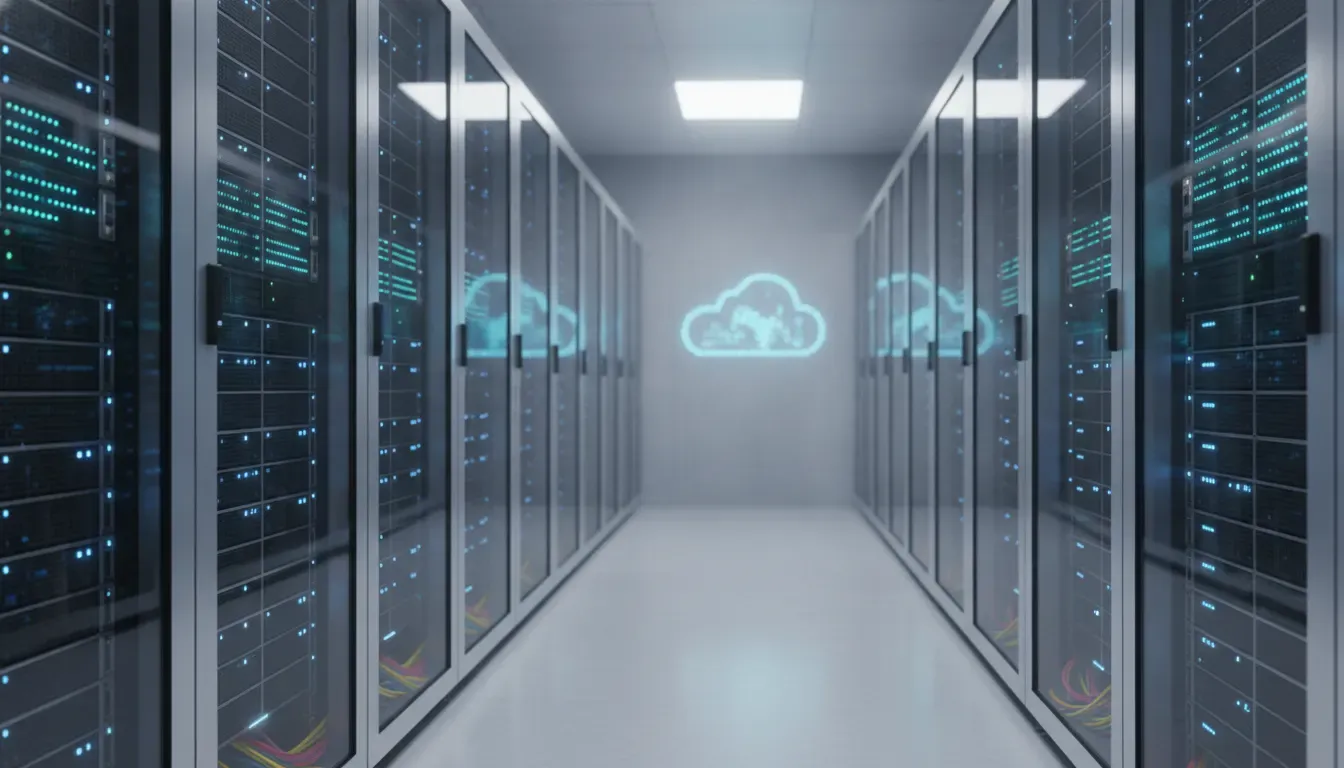
Secure cloud server rack systems optimize training-ready datasets for physical AI applications.
Sorting raw and clean data layers
A strong pipeline uses layers to manage data. The first layer is the raw data. This includes every sensor path and camera frame from the robot. These files are often very big and slow to read. To help, many teams use a robotics data collection SDK to sort the flow. These tools can track sensor data at rates up to 200 Hz. This high speed makes sure you capture every detail of the robot's motion.
The next layer is clean data. This is where you fix the raw files. You might pull out bad runs or add notes to the video. Storing these in a format like Parquet or HDF5 makes them easy to use later. These types of files keep the data small and let you find what you need fast. Using a clear plan helps your team stay on track. It also makes sure your models get the right inputs every time. Integrating your storage with the Trossen Robotics Cloud allows teams to connect physical robot data with secure, cloud-ready databases and distributed model training workflows.
New formats for robot learning
Most teams now use set formats to share and train models. One top choice is LeRobot V2. This format uses Parquet files for data and MP4 for video. It also uses a JSON file to store data about the robot. This mix works well for fast loading when you train. It keeps video and motion steps in sync so the model learns the right moves.
One more key format is Open X-Embodiment. This is a huge set of data from many types of robots. It helps models learn skills that work on more than one machine. Storing your own data in a like way makes it easier to use these big sets. When your data matches these rules, you can use old models to start your work faster. This saves time and cuts down on the new data you need to find.
Training faster with structured storage
Good storage is the heart of fast training. When you use tools like Apache Arrow, you can move data to your GPU memory very fast. This means your training loops spend less time waiting for files. They spend more time learning. Good storage also lets you mix data from many sources. You can pull a few runs from one lab and join them with data from another.
This range is key for growing your work. As your data grows from hours to weeks of video, a simple folder will not work. You need a system that can handle the load. By setting up these systems early, you avoid big bugs as your work grows. Your team can focus on making better models instead of fixing broken data files.
What is the best way to collect robot data?
The best way to collect robot data is through high-fidelity teleoperation paired with an open-source data collection SDK. This approach records synchronized visual streams and high-frequency joint states onto a shared timeline, exporting directly to training-ready formats like LeRobot V2 to bridge the physical AI data gap.
The best way to collect robot data depends on your research goals and task needs. For most teams, the goal is to build a diverse set of facts that helps models work in new settings. Experts at Stanford University show that training on data with high variation can boost success rates from 2.5% to 77.5% when moving to new places.
Ways to gather robotics data
There are four main ways to gather the facts needed for training. Teleoperation uses human control to show the robot how to move. Handheld grabbers let people move a gripper by hand to get visual data without a full robot. Simulation uses software to create lots of data fast. Real-world use collects data as the robot does its tasks in a live spot.
Each path has pros and cons for data quality and speed. Using a robotics data collection SDK helps keep these inputs the same. By using shared tools, you can switch between human control and real-world logs without changing your main workflow.
Comparing data plans
Choosing the right mix of data types is key for a good project. High-quality human data is often a base, while simulation helps grow the scale. New plans like DENSE can even cut time needs by up to 50% while making models work 85% better in new tasks. The table below shows how these ways compare.
Method. | Data Quality. | Data Volume. | Primary Use. |
Teleoperation. | High. | Low. | Hard tasks. |
Handheld Grabbers. | Medium. | High. | Visual data. |
Simulation. | Low. | Very High. | Scaling edge cases. |
Live Use. | Mixed. | Medium. | Updating old plans. |
Improving work speed
To speed up your teleoperation for data collection, you should focus on steady workflows. Solid systems help you move from first tests to full data paths in hours instead of weeks. Using tools that export to common formats ensures your data is ready for training as soon as it is found.
How do robotics companies scale data collection?
Robotics companies scale data collection by deploying fleets of robust, ready-to-use research platforms managed via unified SDKs. By utilizing standardized hardware, remote telemetry pipelines, and expert operator networks, teams continuously capture diverse real-world datasets across multiple tasks and environments to prevent model overfitting.
Scaling data collection is a big hurdle for most robotics labs. To build smart robots, you need a lot of clean data. This data often comes from a mix of fleet use and human help. Many groups now use a "fleet of robots" to gather info in the real world. This helps them find new cases that lab tests might miss. But getting this data to be useful takes more than just turning on a camera.
Fleet Use and Expert Data Networks
Top companies often hire large teams of people to move robots. These people work in shifts to keep the robots active all day. This method is called teleoperation. It lets a person show the robot how to do a task over and over. This is how labs bridge the "data gap" for teleoperation for data collection. Since real-world data does not exist on the web like text or photos, you must create it from scratch.
Some firms now use expert data networks. These are groups of people who collect high-quality data. They use a robotics data collection SDK to make sure every motion and image is saved right. This helps teams move faster. It also lowers the chance of errors that could ruin a training set. High-quality data is the key to making robots that can work in any place.
Using Robust Platforms to Move Faster
Scaling works best when you have the right tools. Trossen Robotics helps labs grow their robotics data collection work with ready-to-use platforms. These systems are built to be tough and last a long time. They let you set up a whole fleet of robots in hours, not weeks. This speed is vital for meeting tight goals. When your hardware is stable, you can spend more time on AI and less on fixing broken parts.
Many teams also use end-to-end models. These models learn directly from the data you give them. As noted in Science Robotics, these data-driven models often beat hand-made code. This lesson shows why having more data is so helpful. It avoids the limits and fatigue of trying to simulate every small detail by hand. Trossen platforms make it easy to scale this cycle of data and learning. To support scaling, Trossen Robotics provides enterprise-grade mass data collection systems that allow labs to run bimanual and mobile experiments across multiple rigs in parallel.
Continuous Data Pipelines and Open SDKs
A good data pipeline must be smooth. Open SDKs allow teams to change how they gather data as their needs grow. Trossen's Data Collection SDK supports high-speed data rates up to 200 Hz. This means you can save very precise motions for fine tasks. It also works with common formats like MCAP and Parquet. These open tools help you stay flexible and keep your data clean.
Frequently Asked Questions
How do robots collect data?
Robots collect data using sensors to track their own state and the world around them. Sensors like cameras capture video, while lidars or depth cameras map space. For learning tasks, engineers also record the robot's motion commands and joint positions. This creates a record of what the robot saw and what it did in response, which is vital for building training datasets.
What types of data are collected in robotics?
Robotic data includes visual, touch, and body state inputs. Cameras and sensors give visual frames to help the robot see things. Joint tools and force sensors track the robot's own posture and grip strength. According to Science Robotics, the most vital data for training includes a mix of video frames and the robot's own motion commands.
How is teleoperation used for data collection?
Teleoperation allows a human to guide a robot through a task using remote controls. As the human moves the robot to pick up or move items, the system records every motion and sensor reading. According to researchers, this method lets trainers show the robot how to do complex tasks like folding towels or sorting parts through many live runs.
Why is high-quality data necessary for physical AI?
Physical AI needs high-quality data to learn how to handle real-world tasks. Training on diverse data with many changes in the setting helps a robot work better in new places. Research studies show that models trained on varied data reach a 77.5 percent success rate. This is much higher than the 2.5 percent rate for models trained on simple or low-quality data.
Ready to build a reliable robotics data collection pipeline?
Every day you wait to build a reliable data pipeline gives other teams a big lead in the race to build smart and capable robots. If you do not set up a way to capture robot data now, you will face high costs and long delays when training models later. Save your team months of work and avoid errors by starting with a robotics data collection SDK and a clear plan for your project today. A clear path now means you can reach your milestones and launch your products much sooner than if you wait to start your work.
Ready to start? Schedule a free consultation now to talk to a robotics expert about your project goals, your technical needs, and your timeline.
Comments