YOUR PHYSICAL AI PARTNER
BUILD PHYSICAL AI SYSTEMS IN HOURS, NOT MONTHS.
Trossen is the hardware and data backbone for Physical AI. Our new line of arms, mobile platforms, and teleoperation tools is built to work together out of the box. No vendor stitching. No custom integration work before you can start collecting data. Pick your hardware, plug into the SDK, and start training models the same day.
20% off your first order for qualifying academic labs and startups.

YOUR PHYSICAL AI PARTNER
BUILD PHYSICAL AI SYSTEMS IN HOURS, NOT MONTHS.
Trossen is the hardware and data backbone for Physical AI. Our new line of arms, mobile platforms, and teleoperation tools is built to work together out of the box. No vendor stitching. No custom integration work before you can start collecting data. Pick your hardware, plug into the SDK, and start training models the same day.
20% off your first order for qualifying academic labs and startups.
EXPLORE OUR PHYSICAL AI SOLUTIONS
01
RESEARCH
Built for the research market first.
Trossen Robotics is the home of the original ALOHA architecture. WidowX Arms, Glide, Workbench, and Rivet let research teams collect clean training data in hours, not months, on hardware the robot learning research community already trusts.
02
DATA COLLECTION
Fleet-ready hardware for scaled robot data collection.
Workbench and Rivet support fixed or mobile data collection fleets. Glide + Cockpit is the teleoperation interface behind clean demonstrations. All systems are field-serviceable and built for uptime, with data monetization available through Trossen Cloud.
03
TELEOPERATION
The robot teleoperation layer between data collection and deployment.
Glide + Cockpit pairs with WidowX Arms, Workbench, or Rivet as a complete teleoperation system. Trossen Cloud connects remote operators to hardware as a beta capability, with performance that depends on network conditions.
04
DEPLOYMENT
Robot arms and mobile manipulators built for startups scaling into production.
Rivet, Workbench, and WidowX Arms are built for reliability in real-world environments, with hardware that can be customized for scaled deployments. Human-in-the-loop support is available when full autonomy isn't ready yet.
YOUR FLEET, YOUR DATA, ONE PLACE TO RUN IT.
TROSSEN CLOUD
Trossen Cloud is the fleet, data, and workflow layer behind every Trossen system. Register a robot, monitor it remotely, and manage data collection across your entire fleet from one dashboard. Backed by field-serviceable hardware, lifetime support, and multi-system deployment options, Trossen Cloud (alpha) is built for teams running fleet and data operations at scale.
Now onboarding alpha partners. Pricing and availability are still being finalized.

AVAILABLE NOW & COMING NEXT
• OPEN SOURCE
$ pip install trossen_sdk
> recording 4 cams · 2 arms
> export → LeRobot V2 ✓
TROSSEN DATA COLLECTION SDK
Open-source C++/Python framework for synchronized multimodal recording, converted straight to LeRobot V2.
Browse existing hardware lineup

TROSSEN AI | ALOHA EVOLVED
Bimanual kits and AI-ready arms: Stationary, Mobile, Solo, WidowX AI, and the TRumi gripper.

TOTL WORKSTATION
A Linux machine-learning workstation built for robotics — CUDA to ROS, no bloat.
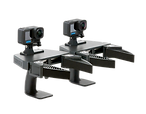
TRUMI
Portable gripper system built for scaled, real-world manipulation-data collection.
20+
YEARS IN ROBOTICS
10,000+
CUSTOMERS WORLDWIDE
400+
UNIVERSITIES & COLLEGES
60+
FORTUNE 500 ORGANIZATIONS
LIFETIME
PRODUCT SUPPORT
RESEARCH AND ENGINEERING TEAMS AT THESE ORGANIZATIONS HAVE USED TROSSEN SYSTEMS

AMAZON

NUERALINK

ETH ZURICH

APPLE

INTEL


META

NVIDIA

TESLA

TOYOTA
TELL US WHAT YOU'RE BUILDING
Our team will help you scope the right embodiment, data workflow, and path to scale — and get back to you within one business day.

Trossen AI Hardware and Kits
Are you interested in obtaining a quote? Fill out the form, and we will contact you soon.
Ship Address*
Bill Address*
Never share sensitive information (credit card numbers, social security numbers, passwords) through this form.